Link for an audiobook discussion on the content listed below - >
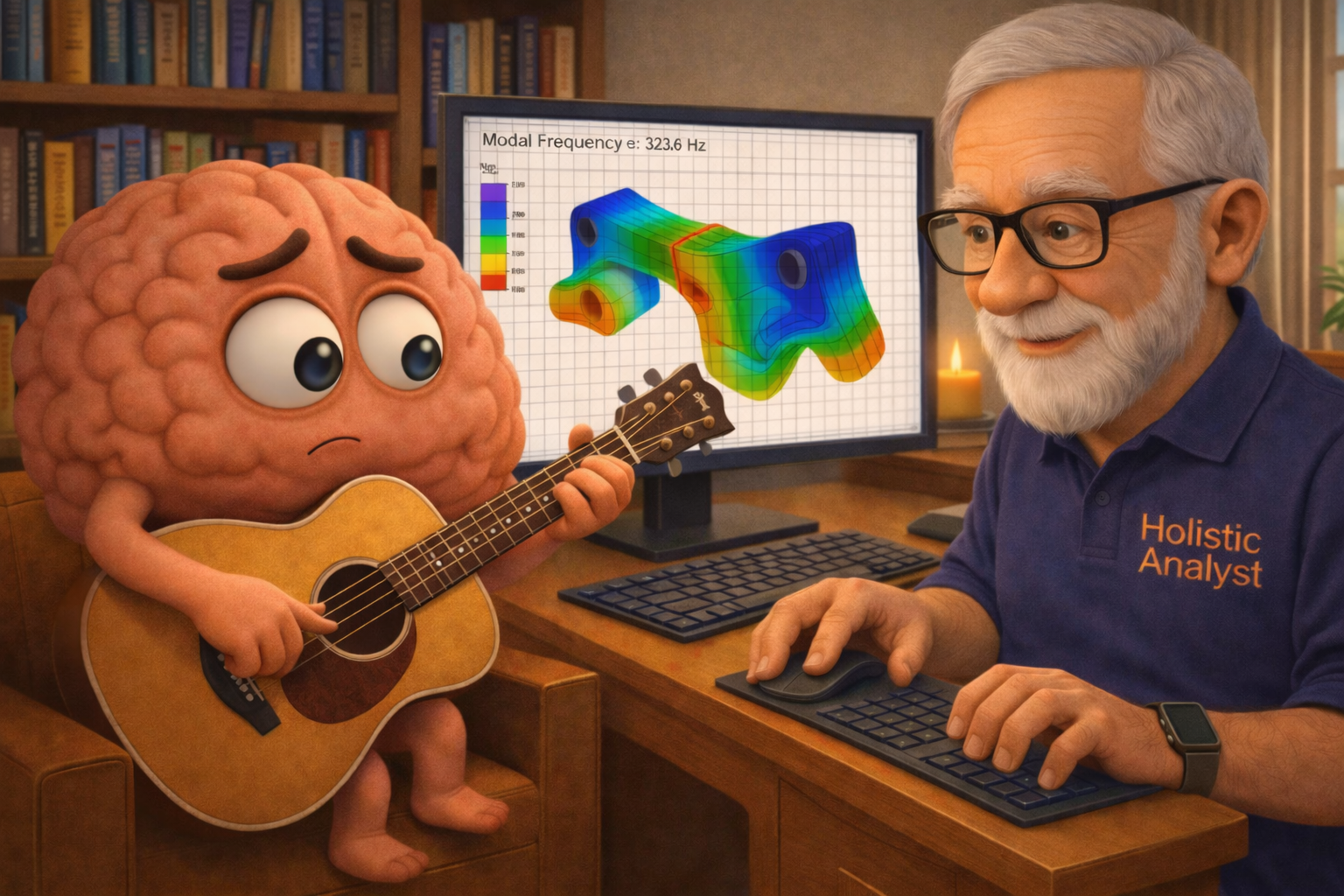
Modal Analysis
Every structure has a dynamic identity — natural frequencies and mode shapes that define how it wants to vibrate. This discussion explores what modal analysis reveals, why mode shapes are relative patterns rather than absolute displacements, how modes superimpose like notes in a chord, and why resonance is a neutral physical phenomenon that can be intentionally harnessed or catastrophically uncontrolled. Covers participation factors, the modal recovery chain from mode shape to physical stress, and the perturbation restrictions that govern the entire analysis family.
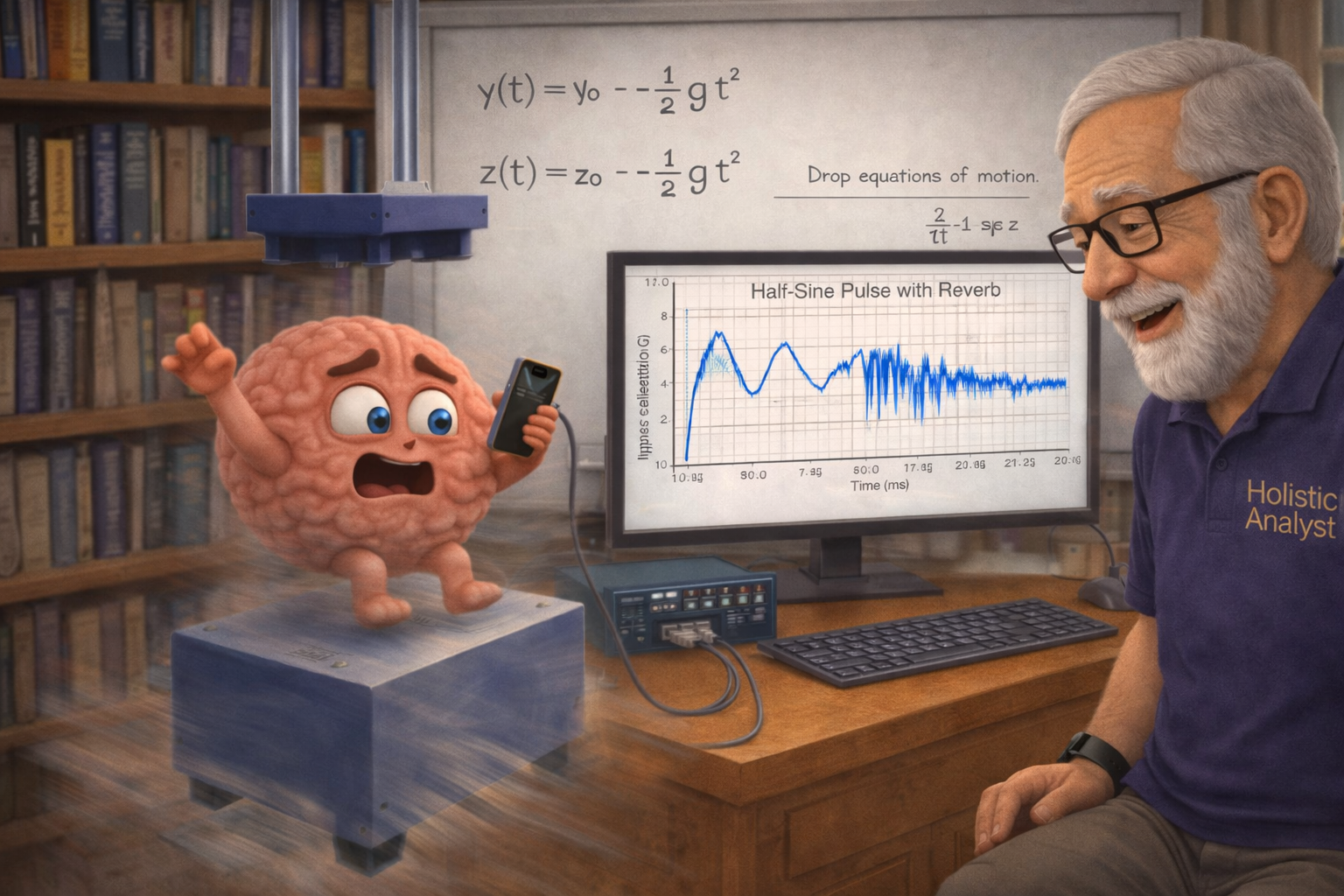
Shock Analysis
02 Shock Analysis — The Moment of Truth
~12 minutes
When products hit floors and stages separate from launch vehicles, the first few milliseconds are the answer. This discussion covers transient shock simulation in the time domain — explicit versus implicit solvers, direct impact modeling versus prescribed acceleration pulses, damping in shock events, and the severity scale from seismic loading at fractions of a G through pyroshock at thousands of G's. Includes practical guidance on simulation duration, secondary impacts, and the critical role of energy balance checking.

SRS Analysis
03 Shock Response Spectrum — The Frequency Fingerprint of a Shock
~10 minutes
The SRS converts a complicated acceleration time history into a single frequency-domain severity curve — peak response versus natural frequency across a bank of single-degree-of-freedom oscillators. This discussion explains the concept, the importance of Q factor specification, the distinction between acceleration SRS and pseudo-velocity SRS (and why the latter correlates to strain energy and damage potential), and how SRS is used both as a specification tool and as a post-processing output from transient simulations.
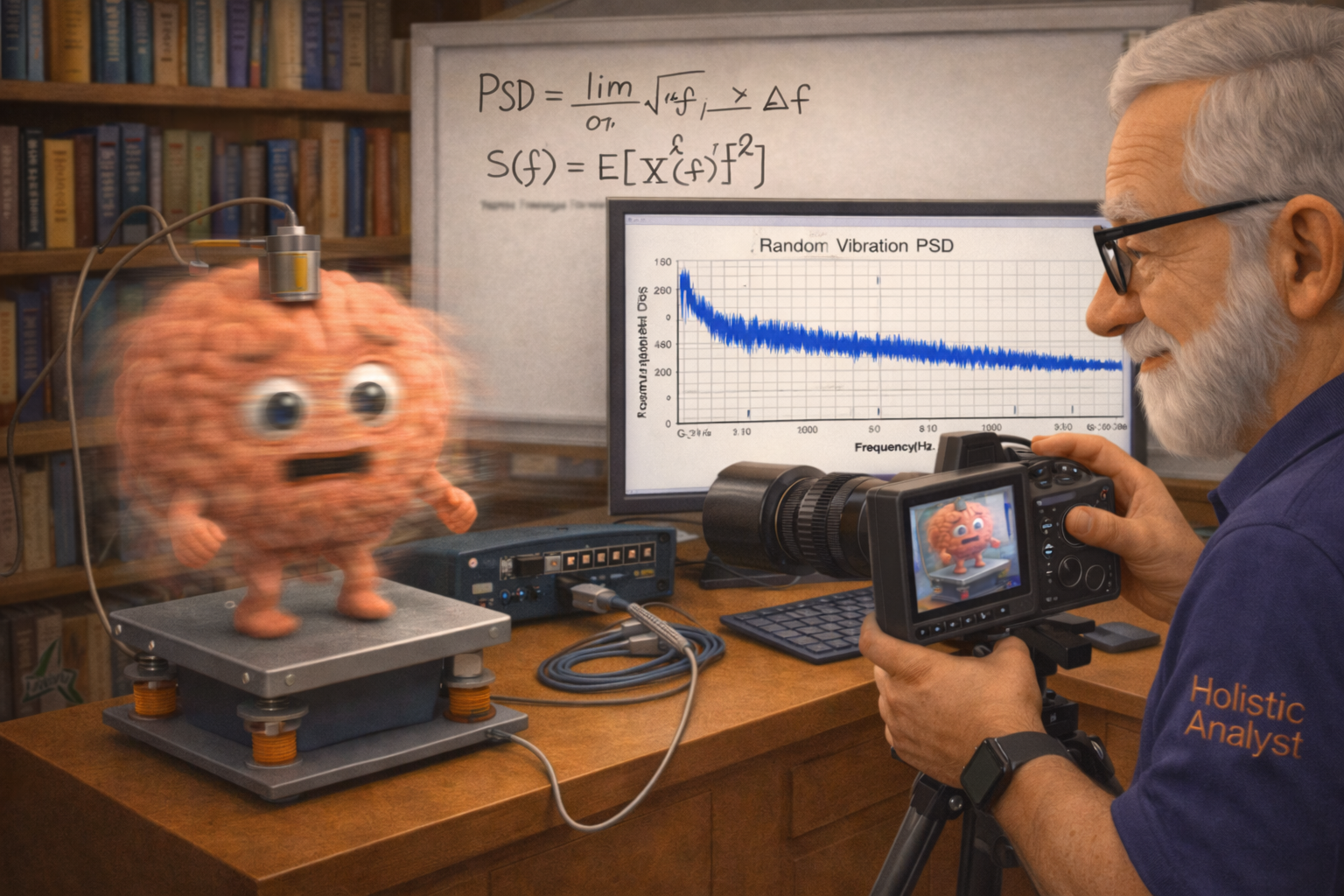
Random Vibration
04 Random Vibration — Living in the Noise
~41 minutes
The most comprehensive discussion in the series. Begins with why RMS exists — squaring eliminates the sign of oscillating signals, averaging captures intensity, and the square root returns to physical units. Builds from there to PSD as a frequency-domain map of vibrational energy, GRMS as the single-number measure of total energy (with physical feel examples from barely perceptible forklift vibration through violent launch environments), and the critical framing that the PSD is the input while the structure's response is shaped by its own transfer function. Includes five detailed real-world PSD environments for rugged electronics: truck and trailer transportation, forklift handling, conveyor systems, high-speed sortation, and machine vision gantry vibration. Covers the full statistical interpretation framework — RMS as standard deviation, the Gaussian probability table from one-sigma through five-sigma, the three-sigma design standard, kurtosis and non-Gaussian environments, why the contour plot is a probability envelope and not a stress map, fatigue accumulation via Miner's rule and the Dirlik method, and application of the RMS framework to displacement, acceleration, and relative motion for clearance, dynamic load, and solder fatigue assessment.
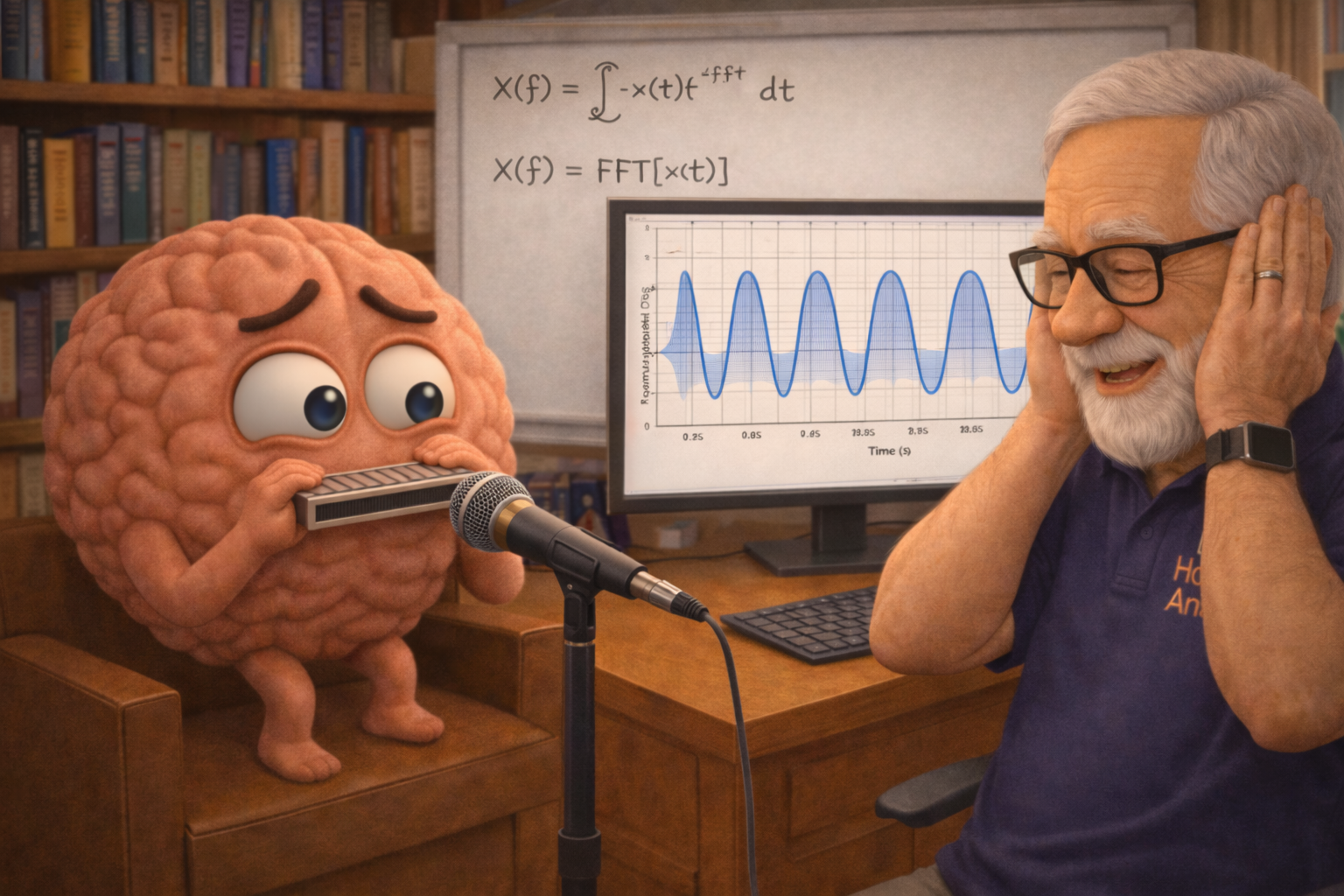
Harmonic Analysis
05 Harmonic Response — Poking the System One Frequency at a Time
~32 minutes
Frames harmonic analysis as the methodical diagnostic poke — one frequency at a time, building the complete transfer function that reveals the system's dynamic personality. Explains why the frequency response function is the transfer function itself, and how this same transfer function is what random vibration uses to reshape broadband input into structural response. Covers real-world tonal environments beyond the textbook — conveyor drive motors, forklift engine firing frequencies, refrigerated trailer compressors, airport baggage handling harmonics — and the sine-on-random reality of most service environments. Includes a dedicated section on damping: modal versus Rayleigh approaches, anchor frequency selection, and the amplitude-dependent joint damping that linear analysis cannot capture. Concludes with the sine-versus-random decision framework — sine sweep as diagnostic, random as qualification, sine dwell as targeted stress test — and the typical test sequence used in qualification programs
Perturbation Limitation
When products hit floors and stages separate from launch vehicles, the first few milliseconds are the answer. This discussion covers transient shock simulation in the time domain — explicit versus implicit solvers, direct impact modeling versus prescribed acceleration pulses, damping in shock events, and the severity scale from seismic loading at fractions of a G through pyroshock at thousands of G's. Includes practical guidance on simulation duration, secondary impacts, and the critical role of energy balance checking.
Jerk & Fragility Analysis
07 Jerk & Fragility Assessment — Beyond Peak G
~13 minutes
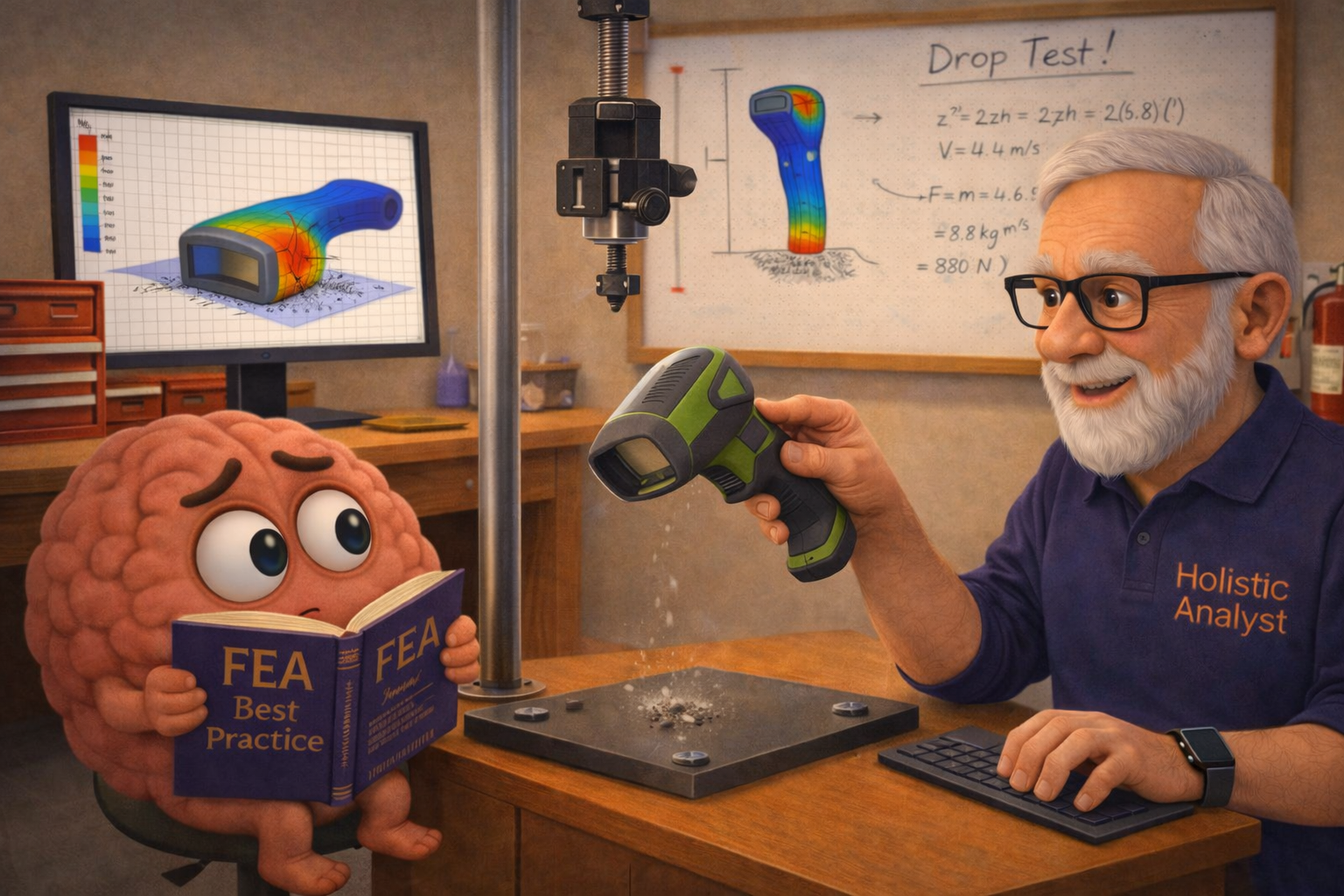
Challenges the assumption that peak acceleration tells the whole story about shock severity. Two shocks at the same drop height can produce dramatically different peak G levels and dramatically different damage — because duration, frequency content, and the rate of onset matter as much as amplitude. Introduces jerk (the time derivative of acceleration) as the forgotten parameter that correlates with crack initiation, glass fracture, and adhesive delamination. Presents a multi-parameter fragility framework combining peak acceleration, velocity change, SRS, pseudo-velocity SRS, and jerk into a coherent picture of what actually breaks and why.

Output and Evaluation
08 Output Requests & Post-Processing — Getting the Data Right
~31 minutes
The final discussion in the series, covering the last mile between solver output and engineering decisions. Begins with the explicit dynamics pipeline: field output versus history output, Nyquist-compliant sampling rates, the critical step of selecting all analysis steps during export, and the full DSP processing chain — interpolation, DC removal, filtering (Butterworth, SAE J211 CFC classes), decimation with anti-aliasing, and computation of derived quantities (velocity, jerk, SRS). Expands into perturbation output interpretation — effective mass coverage as the perturbation equivalent of energy balance, harmonic FRF reading including Q extraction from half-power bandwidth and phase interpretation, the statistical nature of random vibration RMS output, and SRS combination rules. Concludes with a series wrap-up on why we simulate — not just to predict numbers, but to understand systems by choosing the right poke, listening to the response, and using that understanding to make something better